This section describes how banks are managed in Sage Active.
It explains the relationship between bank accounts and payment methods, and how banking data, imported bank movements, reconciliation, and accounting configuration fit together in the Public API.

Resources

The resources below are listed in the same order as in the Banks group in the resources sidebar. Together they let you list connected bank accounts, read and reconcile imported line items from the bank, apply rule-based suggestions, map movements to your accounting entries, and unreconcile a movement when you need to undo that link.

Bank accounts

API resources overview / ⚙️Bank Accounts

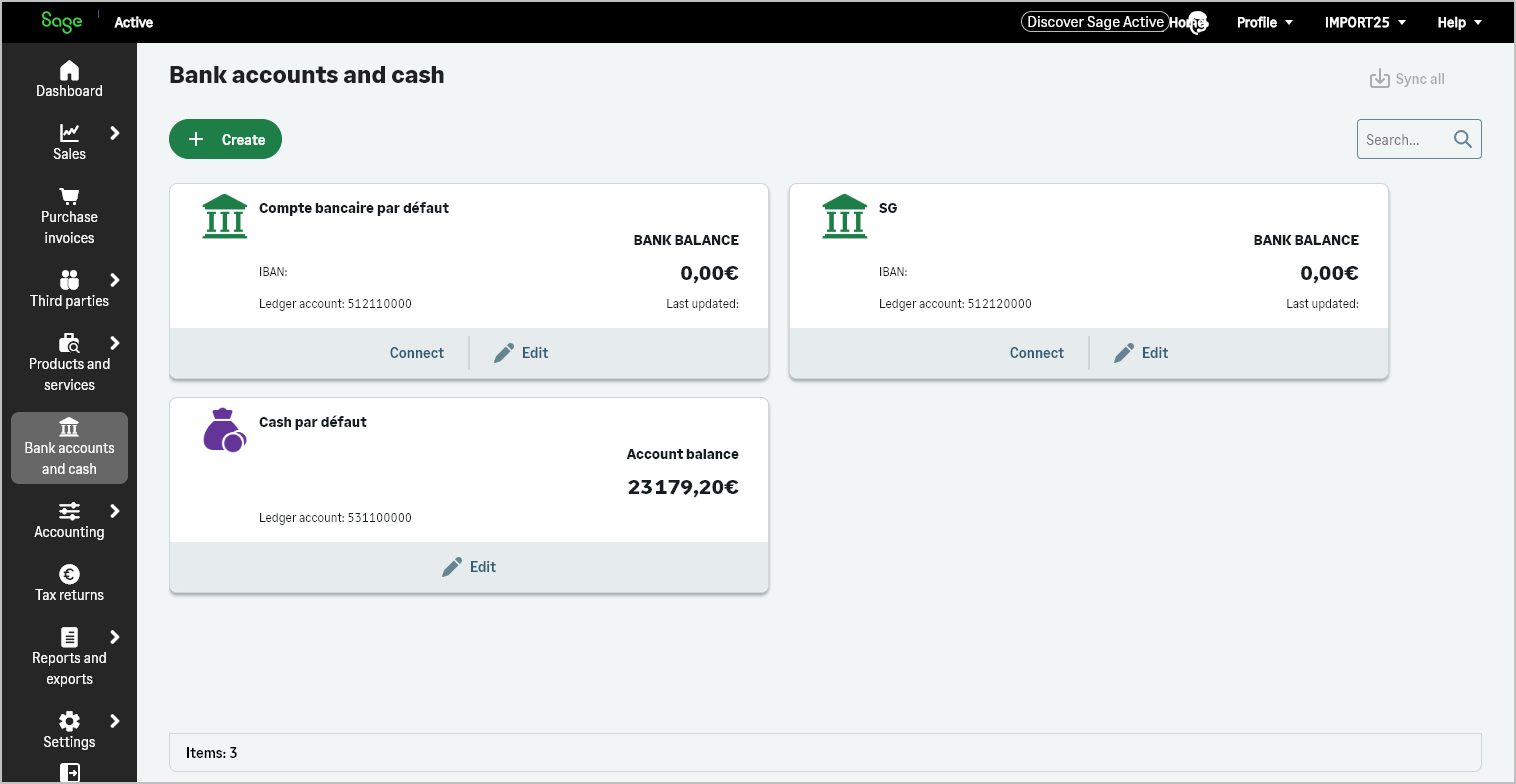
Bank Accounts represent the aggregated view of a bank in Sage Active.
They combine:

  • the definition of the bank account stored in Sage Active (payment method configuration),
  • and the banking information exposed by the bank, such as balances, synchronization status, and transaction availability.

A Bank Account exposes both accounting-related data and banking synchronization data through a single object.

img img

Bank movements

API resources overview / Bank movements

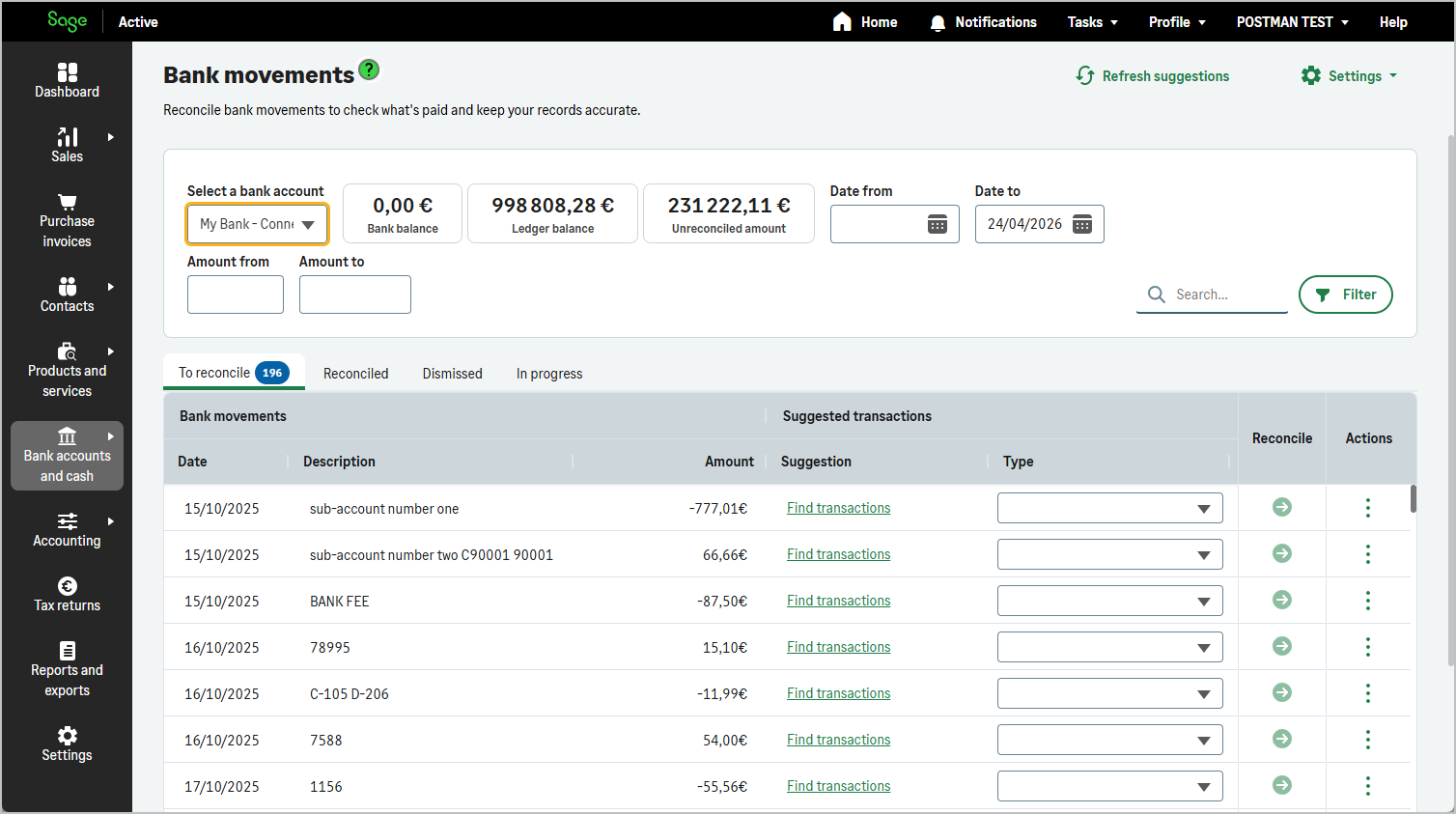
Bank movements are operations imported from the bank and used for reconciliation with your accounting.
Each record combines data returned by the banking connection (amount, dates, reference, labels) with Sage Active processing state (link status, suggested matches, and links to bank accounting entries).
img

Reconcile bank movement

API resources overview / Reconcile bank movement

Reconcile bank movement is a business mutation that links a bank movement to one or more accounting entries and updates reconciliation state in Sage Active.

  • You can reconcile a single movement with one or several accounting entries in one call by listing them in accountingEntries.
  • bankingRuleId is optional: when you set it, use the same identifier as a banking rule that appears in the movement’s proposal items so the applied rule is also reflected in reconciled items on the bank movement. If you do not use a rule from the proposals, you can pass null.
img

Unreconcile bank movement

API resources overview / Unreconcile bank movement

Unreconcile bank movement is a business mutation that reverses the reconciliation for a given bank movement: links to accounting entries and related reconciliation state are cleared for that movement, consistent with undoing the outcome of reconcile bank movement.

Banking rules

API resources overview / Banking rules

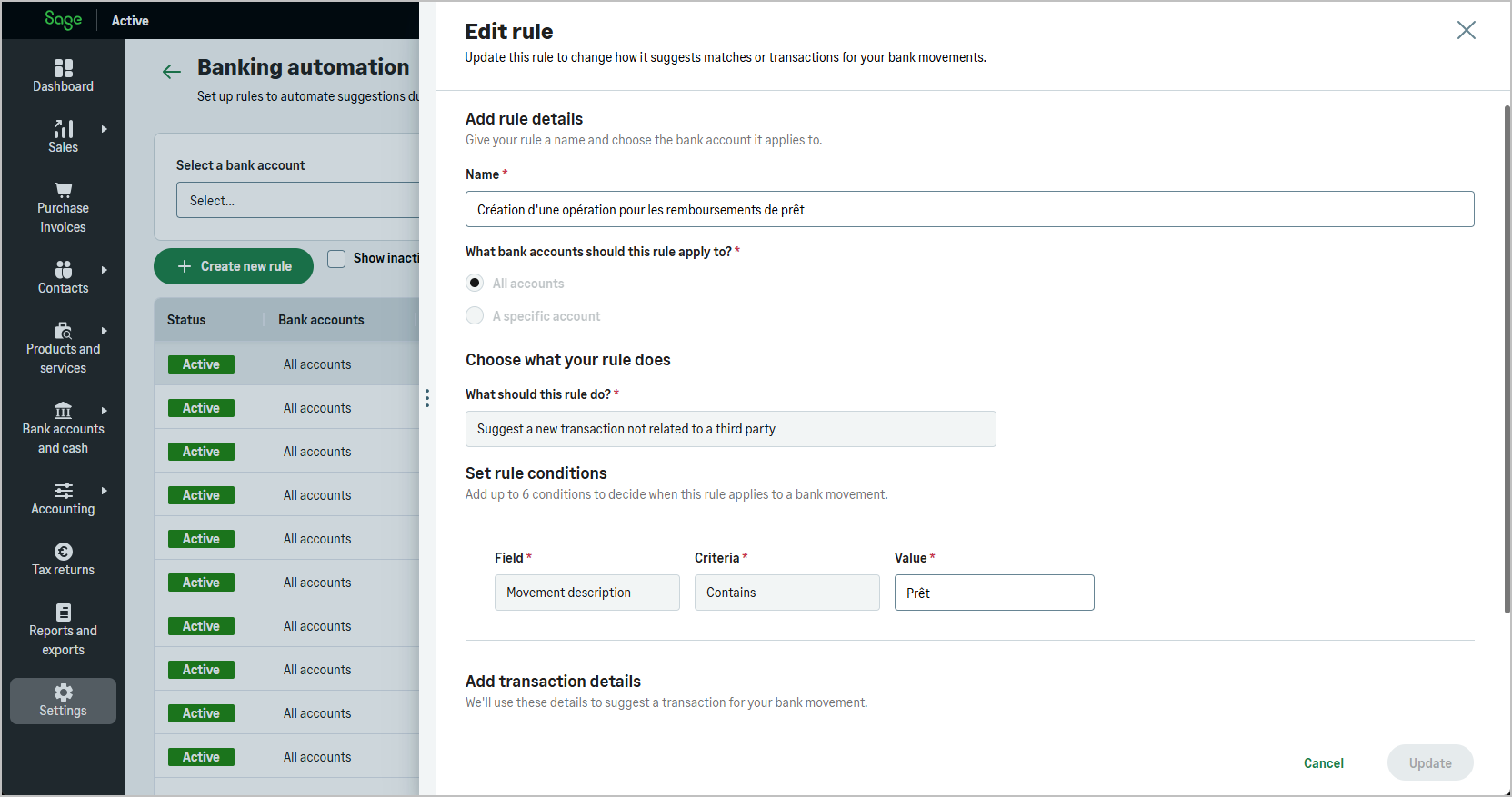
Banking rules drive how bank movements are matched, suggested, or posted to the chart of accounts and related documents.
A rule can target a bank account, an accounting account, third parties, and other criteria; it carries scoring, status, and optional extended metadata.

bankingRuleId is referenced from bank movements proposal items and reconciled items to identify which rule produced or affected a match.

img

Payment methods

API resources overview / Payment methods

Payment Methods represent the configuration of a bank account inside Sage Active.
They define how the bank is used in business operations, such as sales, purchases, and payments, but do not expose banking synchronization data.

Payment Methods contain only the data related to:

  • accounting setup,
  • payment usage,
  • and functional configuration within Sage Active.
img
Relationship between Bank Accounts and Payment Methods
  • A Bank Account is built on top of a Payment Method.
  • The id of a Bank Account is the same identifier as the underlying Payment Method.
  • Bank Accounts enrich Payment Methods with banking data retrieved from the bank, such as balances and synchronization status.

In other words:

  • Payment Methods expose how a bank account is defined and used in Sage Active.
  • Bank Accounts expose the same entity, augmented with live or synchronized banking information.
  • Bank movements use bankAccountId for that same payment method / bank account: you need a live connection to see lines, and you can reconcile them with accounting entries using reconcile bank movement after you have the target entry id(s) (including when they are created by settlement flows).
  • Unreconcile bank movement reverses that reconciliation for a given movement when the API supports it.